
 Clinical Trials
Industry
Clinical Trials
Industry
Every approved drug on the market today—whether a life-saving cancer treatment or a simple over-the-counter pain reliever—was developed through a clinical trial. These trials take years to complete and cost anywhere from hundreds of millions to billions of dollars. Yet, despite their critical role in advancing medicine, the economic side of clinical trials remains largely misunderstood.
Who funds these trials? Why do they cost so much? And how do these costs impact drug pricing and patient access? With AI and automation reshaping the research landscape, clinical trial economics are evolving. Understanding these financial dynamics is key to improving efficiency and accessibility.
The High Cost of Clinical Trials—And Who Pays for Them
Clinical trials represent one of the most expensive aspects of drug development. On average, it costs between $1.3 billion and $2.6 billion to bring a new drug to market. These costs include preclinical research, clinical testing across multiple phases, and regulatory approvals, all of which require significant financial investment.
The funding for clinical trials comes from several key sources. Pharmaceutical and biotech companies are the largest funders, investing billions in trials in the hope of developing commercially successful treatments. However, drug development is a high-risk endeavor, with only about 12 percent of drugs that enter clinical trials ever making it to market. The financial risk is significant, and companies rely on successful drugs to offset the costs of multiple failed ones.
Government agencies and public institutions also play a critical role in funding clinical trials, particularly for diseases that lack commercial appeal, such as rare diseases or infectious diseases affecting low-income populations. Organizations like the National Institutes of Health (NIH) in the United States and the Canadian Institutes of Health Research (CIHR) fund studies to advance medical knowledge and improve public health.
Nonprofit organizations and patient advocacy groups provide another crucial source of funding, particularly in rare disease research. Many of these conditions are too uncommon to attract pharmaceutical investment, so patient-led organizations step in to fill the gap. The Michael J. Fox Foundation for Parkinson’s research and The Leukemia & Lymphoma Society are examples of groups that fund clinical trials to accelerate the development of new treatments.
Contract Research Organizations (CROs) do not directly fund trials but play a critical role in managing and running studies on behalf of pharmaceutical companies, governments, and nonprofits. These organizations help streamline the research process, bringing efficiency and expertise to clinical development.
How Trial Costs Impact Drug Pricing and Accessibility
The high cost of clinical trials has a direct impact on the price of new drugs. When a drug is approved, the pharmaceutical company must set a price that allows it to recover the billions spent on development, including the costs of failed trials. This is a major reason why new drugs, particularly those for rare diseases or complex conditions, often come with high price tags.
In countries with public healthcare systems, governments negotiate drug prices to keep them affordable for patients. In the United States, where the system is more privatized, insurance companies and patients bear a larger share of the cost, often leading to high out-of-pocket expenses. In low-income countries, expensive new treatments are often unavailable unless subsidized by global health organizations.
The challenge in clinical trial economics is balancing innovation with affordability. High drug prices incentivize pharmaceutical companies to invest in research, but they also limit patient access and strain healthcare systems. Policymakers, researchers, and industry leaders continue to debate how to make drug development more cost-effective while ensuring that patients receive the treatments they need.
The Role of AI and Efficiency in Reducing Clinical Trial Costs
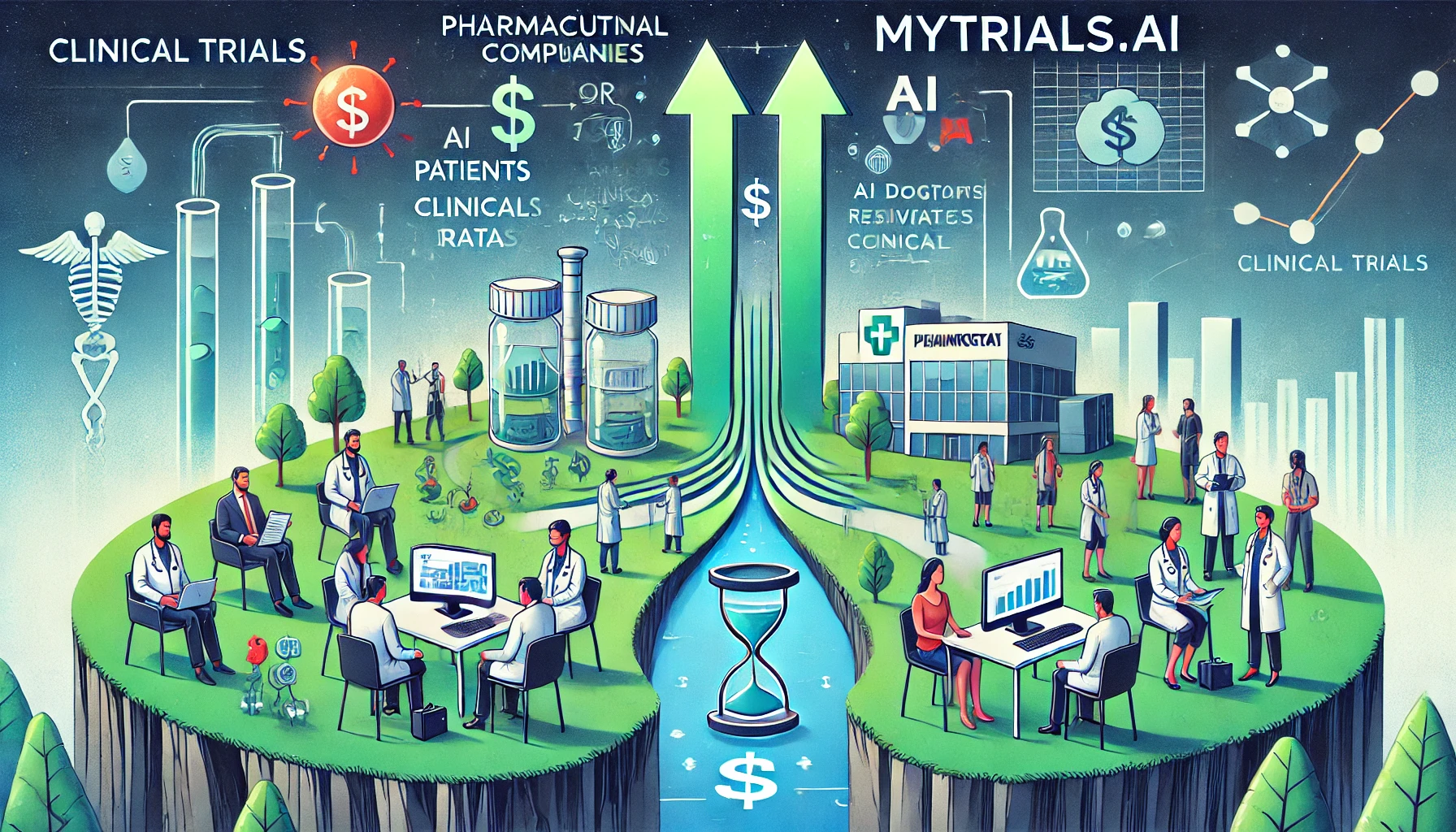
As clinical trial costs continue to rise, AI and automation are emerging as powerful tools to make the process more efficient and accessible. One of the most expensive aspects of clinical trials is patient recruitment, which can take months or even years. AI-driven platforms like MyTrials.ai are helping to solve this problem by matching eligible patients with trials in minutes instead of months, reducing recruitment delays and costs.
Beyond recruitment, AI is optimizing trial design by analyzing past studies to predict outcomes and improve research methodologies. This reduces the likelihood of costly trial failures and helps researchers design more effective studies. AI-driven data analysis is also streamlining the processing of trial results, accelerating regulatory approvals and bringing treatments to market faster.
Another major innovation is the rise of virtual and decentralized clinical trials, where patients can participate remotely instead of traveling to trial sites. This approach lowers costs for both researchers and participants while increasing diversity in clinical studies. By eliminating logistical barriers, decentralized trials expand access to underrepresented populations, ensuring that new treatments are tested on a broader and more representative patient base.
The Future of Clinical Trial Economics: Smarter, Faster, More Accessible
Clinical trials have long been one of the biggest bottlenecks in drug development. They are expensive, slow, and often inaccessible to the very patients who need them most. However, with AI-driven platforms like MyTrials.ai, greater global collaboration, and smarter trial designs, the future of clinical research is moving toward greater efficiency and accessibility.
A more cost-effective clinical trial system means more drugs can reach patients faster, healthcare systems can manage costs more effectively, and innovation can continue without making life-saving treatments unaffordable. The goal is to make clinical trials work for everyone—patients, researchers, and healthcare providers alike.
At MyTrials.ai, we are working to create a future where every patient can find and access a clinical trial without unnecessary delays. By leveraging AI, we are helping researchers reduce costs while accelerating medical breakthroughs.
As the industry evolves, the key question remains: How can we continue to lower trial costs while ensuring the highest standards of safety and efficacy? The answer lies in innovation, efficiency, and a commitment to making research truly patient-centric.